The HVAC documentation problem is usually not the form
Most HVAC businesses already have a service form, a dispatch system, a billing process, and a way to attach notes. The weak point is often earlier: the moment the information is first spoken.
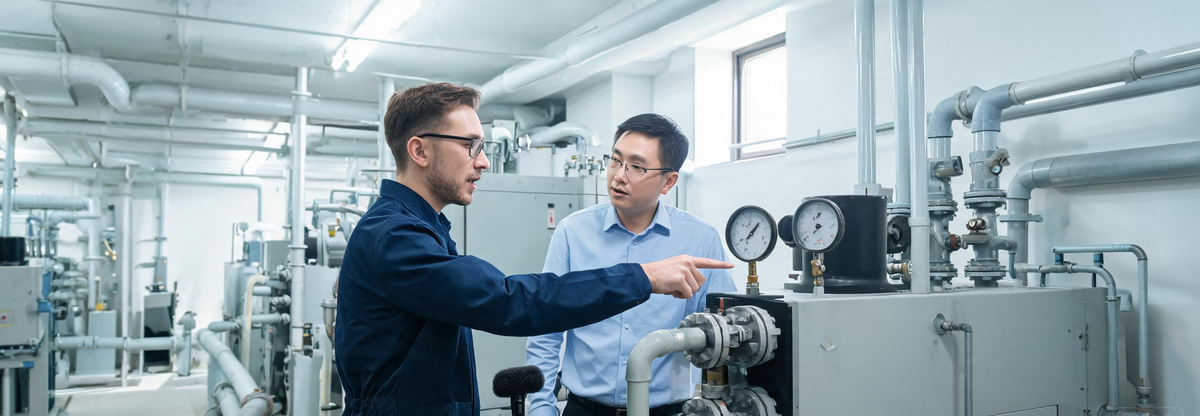
A technician is standing beside a rooftop unit or in a mechanical room. A compressor is running. A blower cycles on. The customer is explaining that the unit fails at certain times, or that a tenant has complained about airflow, odor, or noise. The technician talks through the diagnosis, mentions a suspected part, notes a temporary fix, and says what should happen on the next visit.
That is the real service record taking shape. But it is happening in a loud, awkward environment.
If the capture tool is a phone microphone, a headset used for calls, or whatever recorder is handy that day, the result can be inconsistent. The technician may be close to the phone, but the customer is several steps away. The phone may be in a pocket, on a toolbox, or sitting on the unit. Compressor noise can bury the useful detail. Later, when the technician has to write the report, the notes may become short, generic, or incomplete:
- – “Checked unit. Needs follow-up.”
- – “Possible board issue.”
- – “Customer said it happens sometimes.”
- – “Return with parts.”
Those notes create real operating friction. Dispatch may not know what to schedule. The next technician may not know what was already tested. The office may need to call the technician again. The customer may ask why the recommendation is unclear. A callback can become harder to resolve simply because the spoken context was not captured well enough the first time.
Why HA-MIC06 fits HVAC service environments
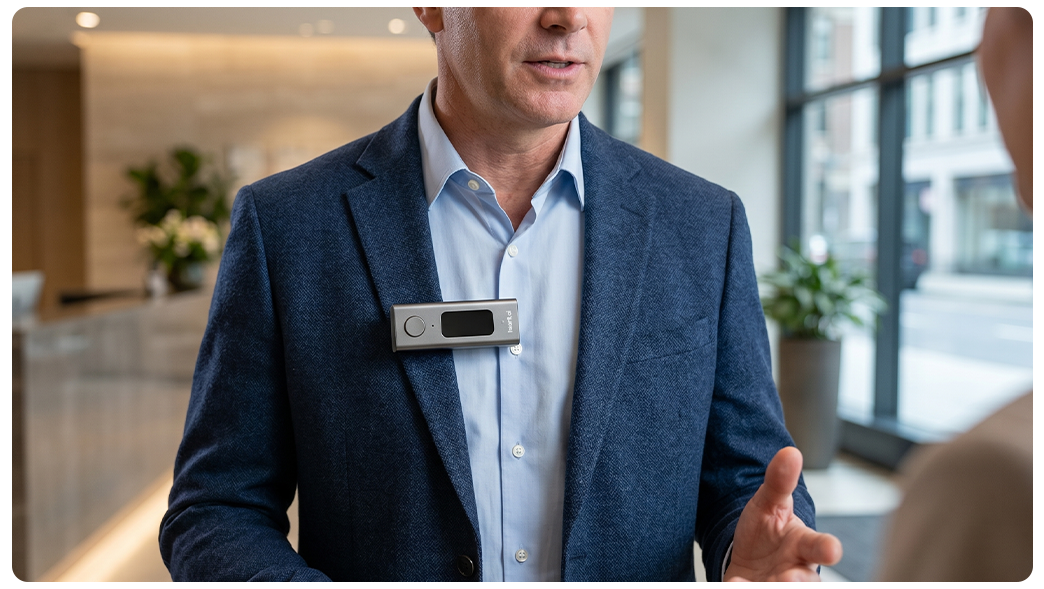
HA-MIC06, branded by Hearit, is a professional AI voice device for clinic and enterprise use. For an HVAC company, the useful point is not that it is another gadget. The useful point is that it can become the dedicated capture device for service documentation.
The MIC06 uses a hybrid microphone array: condenser plus omnidirectional microphones, supported by AI noise reduction. In practical HVAC terms, that matters because field documentation often includes two kinds of voices at once.
First, there is the close voice: the technician describing what they are seeing, what they tested, what the equipment is doing, and what needs to happen next. Second, there are room voices: the customer, property manager, maintenance lead, helper, or another technician adding details from a short distance away.
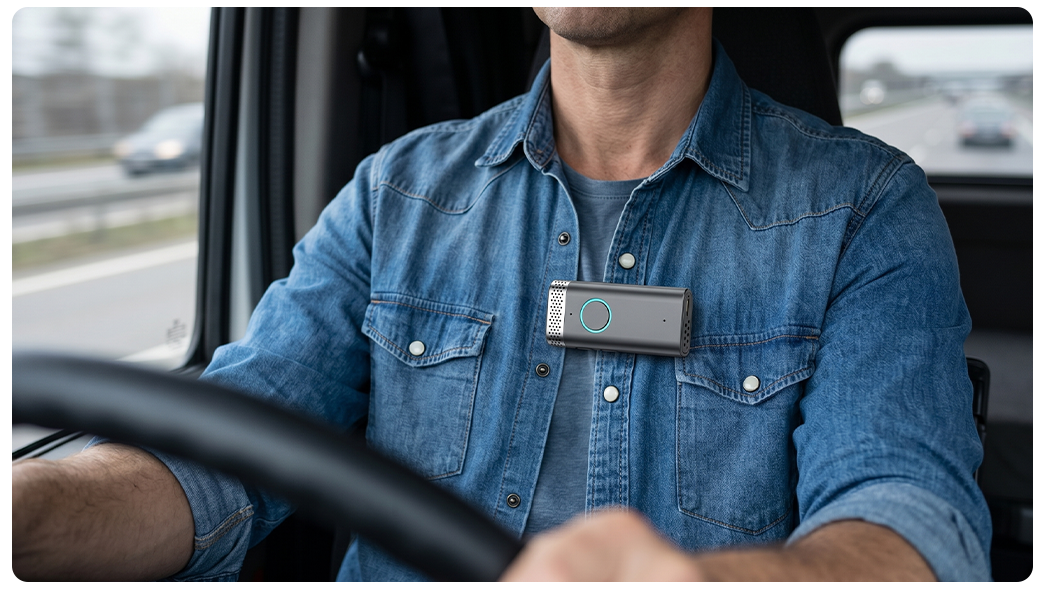
A phone mic can struggle with that mix, especially when it is not placed consistently. The MIC06 is designed to capture both close voices and room voices with minimal obstruction. In a service call, that helps preserve more of the conversation around the diagnosis, the parts discussion, and the follow-up plan, even when the environment is not quiet.
AI noise reduction is also relevant to HVAC work because many important conversations happen near operating equipment. The goal is not to make a mechanical room sound like an office. The goal is to give the team a better, more consistent capture of the voices that drive the service report.
HA-MIC06 also includes Bluetooth 5 connectivity, which makes it practical as a dedicated device within a field workflow. The larger operational advantage, however, is standardization: instead of every technician choosing a different phone position, headset, or recorder, the shop can set one capture method and train around it.
Why one dedicated capture standard beats “whatever mic is handy”
In many HVAC shops, documentation quality varies by technician. One tech dictates detailed notes after every visit. Another types a few lines at the end of the day. Another tries to remember the customer’s comments from several calls back. Even strong technicians can produce weak documentation when the capture method is improvised.
A dedicated device like HA-MIC06 gives managers a simpler standard to explain and improve:
- – Use the same voice capture device for the same type of service work.
- – Place it consistently before the conversation turns technical.
- – Capture the technician’s close voice and the surrounding conversation.
- – Review the capture before finalizing the report.
- – Carry the important follow-up details into the next visit.
That is easier to govern than a loose instruction such as “take better notes.” It also gives the owner or service manager a fairer way to coach the team. If the capture method is different every time, it is hard to know whether the problem is the technician, the environment, or the tool. With one standard, the process becomes easier to inspect.
A simple capture, review, follow-up workflow for HVAC teams
An HVAC company does not need a complicated program to improve field documentation. A simple workflow is enough.
1. Set the pre-job standard
Before deploying the MIC06, decide when it should be used. A practical starting point is any call where the details are likely to matter later: diagnostic visits, warranty issues, repeated complaints, quoted repairs, equipment replacement discussions, and calls involving multiple stakeholders.
Create a short field rule for technicians. For example: use the MIC06 during the diagnostic summary, customer discussion, and next-step explanation. Follow company policy for permission and customer communication. Keep the device placement consistent enough that the technician’s voice and nearby room voices can be captured without being blocked.
The point is to make capture part of the service routine, not an extra task the technician remembers only on complicated days.
2. Capture the service discussion on site
On site, the technician should use the MIC06 when the important details are being spoken. That may include:
- – The customer’s description of the issue.
- – The conditions found at the equipment.
- – What was tested or observed.
- – The likely cause or open questions.
- – Parts that may be needed.
- – Safety or access concerns.
- – What should happen on the next visit.
This is where the MIC06’s hybrid array is useful. The technician may be speaking close to the device while the customer or maintenance contact adds comments from nearby. The environment may include equipment noise. A capture device designed for close and room voices, supported by AI noise reduction, is a better fit than relying on an improvised phone position.
3. Review and turn the capture into a service report
After the call, the capture should be reviewed while the job is still fresh. The technician, dispatcher, or service manager can use it to complete the service report with clearer detail:
- – What the customer reported.
- – What the technician found.
- – What was completed.
- – What remains unresolved.
- – What parts, access, or approvals are needed.
- – What the next technician should know before arriving.
This step is where vague notes become useful notes. Instead of trying to reconstruct the job from memory, the team has a consistent capture to reference.
4. Use the record before the next visit
The follow-up value is often where the owner feels the difference. Before a return visit, the next technician can review the service report and any captured context the company chooses to retain. Dispatch can schedule more accurately. The office can explain the recommendation with more confidence. The customer does not have to repeat the same story from the beginning.
For HVAC work, that continuity matters. A callback, a warranty concern, or a multi-visit repair can go sideways when the second visit starts with thin notes. Better capture helps the team carry forward the details that were already spoken on the first call.
The payoff for the HVAC owner
HA-MIC06 is not about adding more paperwork. It is about improving the raw material that becomes the paperwork.
For the owner or service manager, the benefits are practical:
- – Cleaner service reports with more complete job context.
- – Fewer callbacks caused by vague or missing notes.
- – More consistent documentation across technicians.
- – Easier coaching because the capture process is standardized.
- – Better follow-up when a job requires parts, approval, or a return visit.
Most HVAC teams do not need more places to type. They need a dependable way to capture what was said when the diagnosis, parts plan, and customer expectations were being discussed in the field.
HA-MIC06 gives the shop one dedicated voice capture standard for a repeatable capture, review, and follow-up workflow. For HVAC service businesses that want cleaner reports without turning technicians into office staff, it is a practical place to start.