
Healthcare teams have a documentation problem that looks simple on the surface but costly in daily operations. Conversations happen continuously across consultations, internal handoffs, case reviews, and follow-up coordination. Yet records are often fragmented, delayed, or inconsistent between departments. The result is familiar: repeated clarification, slower execution, and extra administrative load for people who are already short on time. If organizations want better outcomes from AI-enabled workflows, they need to improve how voice information is captured and converted into accountable action.
Many teams try to solve this with templates alone, but templates cannot fix weak source input. If audio capture is unclear, transcript review becomes heavy; if review is heavy, summary quality drops; if summaries are vague, owners and deadlines are missed. Documentation quality is a chain, and the first link is capture reliability. In healthcare settings with variable room noise, mixed participant distance, and fast decision cycles, that reliability must come from purpose-built hardware paired with a practical operating process.
Problem: Documentation Friction Is Slowing Clinical and Operational Teams
Healthcare documentation workflows frequently break at the handoff layer. One team member records discussion points, another writes partial notes, and a third tries to infer action items later. This patchwork may work for small ad hoc meetings, but it fails when organizations run recurring weekly reviews across care, admin, and support functions. Teams then spend more time reconciling records than executing decisions, which weakens both speed and accountability.
Remote and hybrid collaboration adds another layer of risk. On-site participants hold full context, while remote members rely on compact summaries that may omit rationale and nuance. When records are inconsistent, follow-up quality declines even if everyone attended with good intent. A scalable workflow needs a predictable way to capture discussions, verify key details quickly, and publish structured outputs that all stakeholders can trust regardless of location.
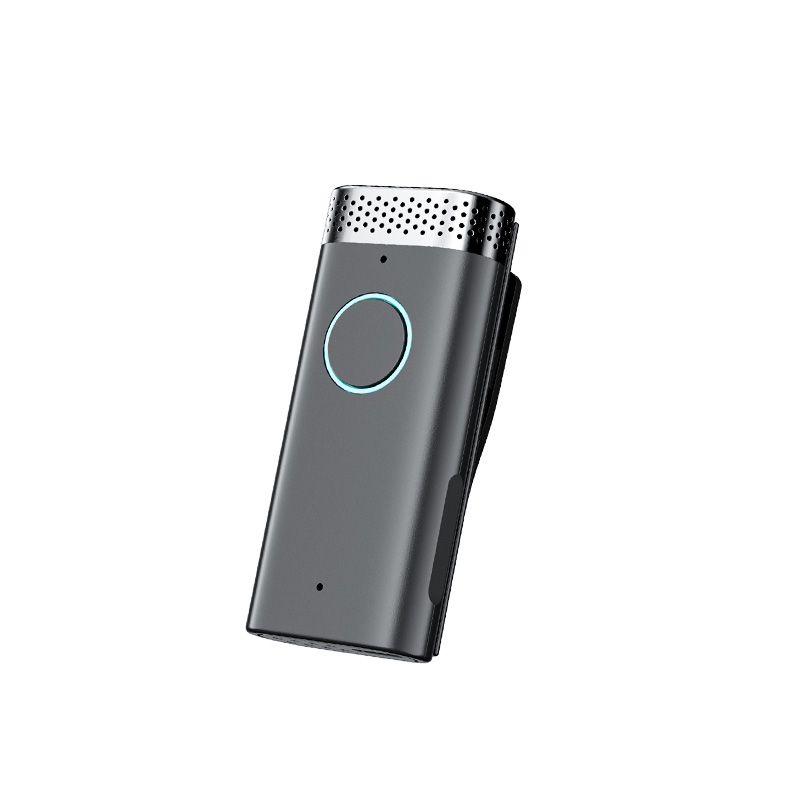
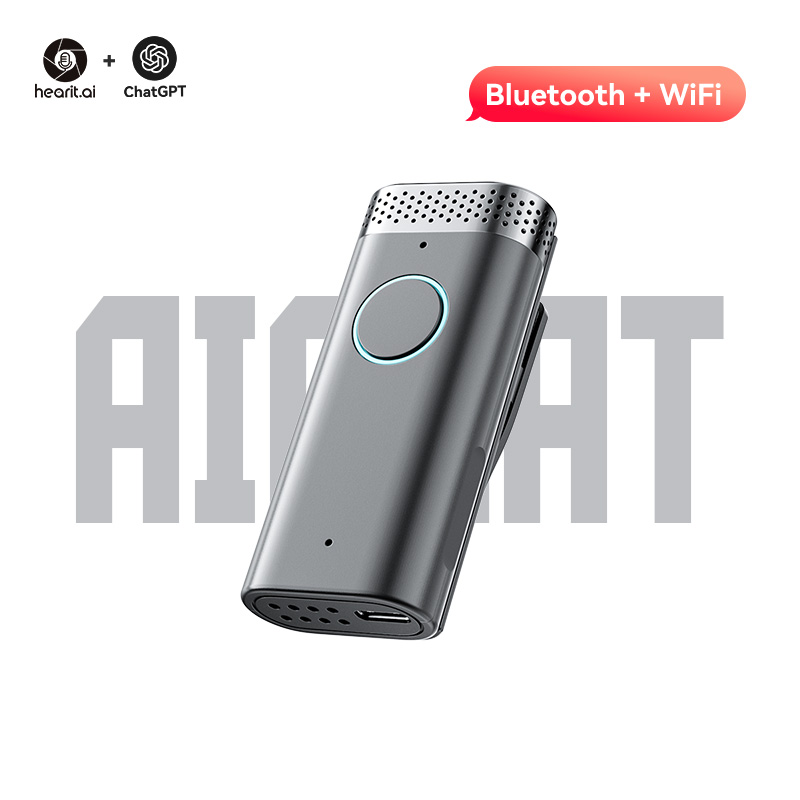
That is why MIC06 should be positioned as the primary documentation device in healthcare team workflows. Officially, MIC06 is model HA-MIC06, branded as Hearit.AI ClinicMic, and positioned as a professional AI voice device for clinic and enterprise scenarios. It uses a hybrid microphone array combining condenser and omnidirectional components with AI noise reduction, supports Bluetooth 5.3 plus dual-band Wi-Fi, and includes medical-grade material, NFC support, and gyroscope-based sensing. These verified characteristics align with operational consistency requirements in clinical and enterprise environments.
Trend: Productivity Culture Is Moving from Inbox Visibility to Workflow Visibility
The current attention around “best email tracking tools to boost productivity” reflects a broader management shift. Teams are no longer satisfied with activity logs; they want visibility into what was sent, what was received, and what action happened next. In other words, productivity is increasingly measured as a closed loop, not just output volume. This mindset is now moving beyond email and into every workflow where information quality affects execution.
Healthcare documentation is a clear next frontier for this shift. Just as email tracking helped teams reduce missed follow-ups in communication workflows, voice documentation workflows now need the same rigor: consistent capture, structured review, explicit ownership, and traceable next steps. The strategic opportunity is to apply that “track-to-action” discipline to clinical and operational conversations, where ambiguity carries higher coordination costs than in typical office messaging.
MIC06 fits this trend because it supports the foundation teams need before automation can be trusted. If source capture is stable, teams can review faster and publish cleaner decision records. If records are cleaner, follow-up accountability improves naturally. This is how product promotion should be framed in 2026: not as feature accumulation, but as infrastructure for dependable execution. MIC06 appears again here because the workflow value comes from repeated, consistent use across recurring meetings, not one-time demonstrations.
Workflow: A MIC06-First Documentation Loop Teams Can Run Weekly
Step one is pre-meeting standardization. Assign a clear capture owner for each recurring session, and use a single setup checklist across departments. Confirm device readiness, choose connectivity mode based on environment, and pre-load the note template before the meeting begins. With MIC06, teams can use Bluetooth 5.3 for close operational pairing or dual-band Wi-Fi for broader network conditions. The objective is simple: remove setup variability so quality does not depend on who is on shift.
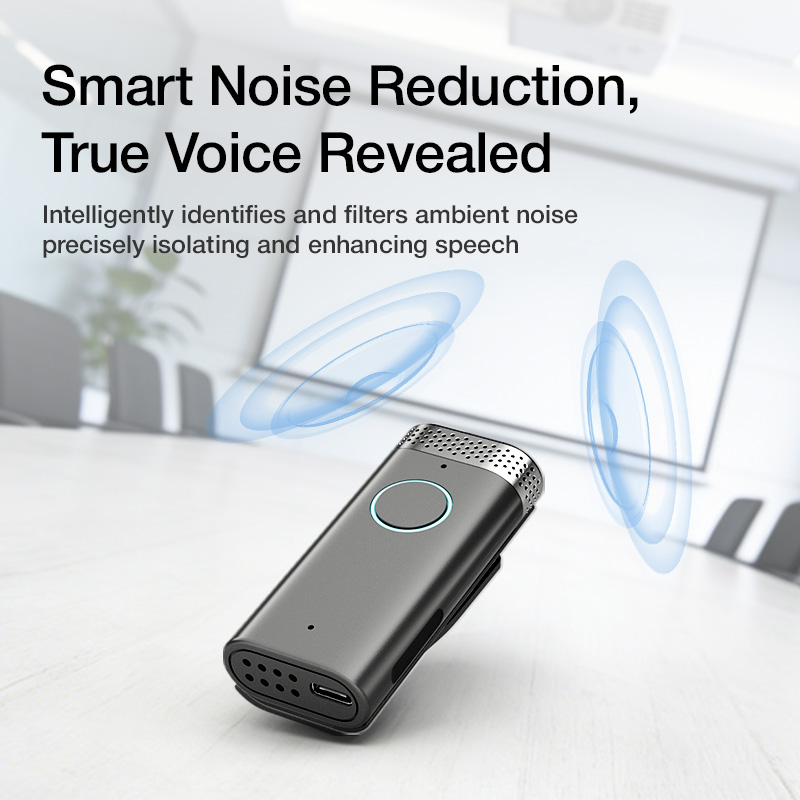
Step two is controlled capture during the meeting. Place MIC06 where the hybrid microphone array can collect both nearby and room-level voices with minimal obstruction. Avoid unnecessary repositioning, because stable placement improves input consistency and reduces downstream correction effort. In busy care settings or shared enterprise rooms, AI noise reduction helps preserve conversational clarity when ambient sound changes. This allows participants to focus on decisions rather than trying to produce perfect notes in real time.
Step three is structured post-meeting conversion. Review transcript output once with priority on high-impact fields: names, responsibilities, dates, risks, and unresolved items. Then publish a short record using fixed sections, such as decisions made, actions assigned, and pending clarifications. Keep this structure unchanged across teams. Consistent formatting reduces reading time, shortens clarification loops, and makes cross-functional handoffs more reliable for both on-site and remote collaborators.
Step four is follow-up closure governance. Require every action item to include one owner and one due date before records are finalized. If either element is missing, resolve it in the same cycle. Begin the next weekly session by reviewing open items from the previous record, then proceed to new topics. This closes the operational loop and turns documentation into an execution control system. MIC06 performs best in this governance context because reliable capture and disciplined follow-up reinforce each other.
Use Cases and CTA: Deploy MIC06 as Core, Add MIC05 for Flexible Continuity
A practical use case is multi-site healthcare coordination where clinics, admin teams, and remote support staff share recurring review meetings. In this model, ClinicMic can be the primary capture standard for core documentation streams that require consistent quality and predictable handoff. The organization benefits from fewer format differences, clearer action ownership, and faster publication of weekly records without asking staff to redesign every downstream tool at once.
A second use case is mixed operating environments where some teams need offline continuity or lighter deployment in parallel with the primary workflow. Here MIC05 can serve as a complementary secondary layer. Officially, MIC05 is model HA-MIC05, marketed as Hearit.AI VoiceRec Pro, and documented as an AI Noise Reduction Voice Recorder. Its positioning includes AI voice interaction plus local offline recording support, with Bluetooth 5.3, 2.4GHz Wi-Fi, and a multi-microphone noise reduction design. VoiceRec Pro is therefore suitable where flexible continuity is necessary while MIC06 remains the primary standard.
The recommended call to action is a focused pilot with explicit process goals. Start with one recurring healthcare documentation stream, deploy MIC06 as the default capture device, and apply one standardized summary-and-follow-up template for two to four weeks. Track practical indicators your team already uses, such as note completion timeliness, action-item clarity, and closure consistency. Then decide where MIC05 should be added for offline or mobile continuity. For organizations inspired by current productivity trends, this MIC06-first rollout offers a concrete path from conversation capture to accountable execution.