
Healthcare teams are being asked to move faster while documenting more. Every handoff, case discussion, internal sync, and follow-up note now carries operational weight, especially when care delivery and coordination are split across in-person and remote roles. The result is a familiar tension: teams want AI-driven speed, but they cannot accept documentation gaps that create confusion later. In many organizations, this tension is no longer a technical debate; it is a daily workflow problem that affects quality, accountability, and execution.
That is why documentation strategy in healthcare is shifting from app-centric thinking to workflow-centric design. Teams are learning that output quality depends heavily on input quality, and input quality starts with capture. If the original voice capture is inconsistent, transcript cleanup expands, summaries become less reliable, and action tracking weakens. A scalable documentation system has to begin with a dependable capture layer, then move into structured review and follow-up.
Problem: Faster Meetings, More Stakeholders, and Rising Documentation Risk
In most healthcare organizations, documentation breakdown is not caused by lack of effort. People work hard, but the process is fragmented. One person writes notes manually, another records audio informally, and a third reconstructs action items from memory. This patchwork can work for small teams, but it struggles when weekly meeting volume grows and more participants join from different functions such as operations, care coordination, billing, and administration.
A second issue is uneven context transfer. Remote participants often receive short summaries that omit why a decision was made, while on-site teams hold fuller context that remains undocumented. Over time, this creates repeated questions, duplicate work, and slower closure on follow-up items. The organization ends up with more records but less clarity, which is the opposite of what AI-enabled productivity should deliver.
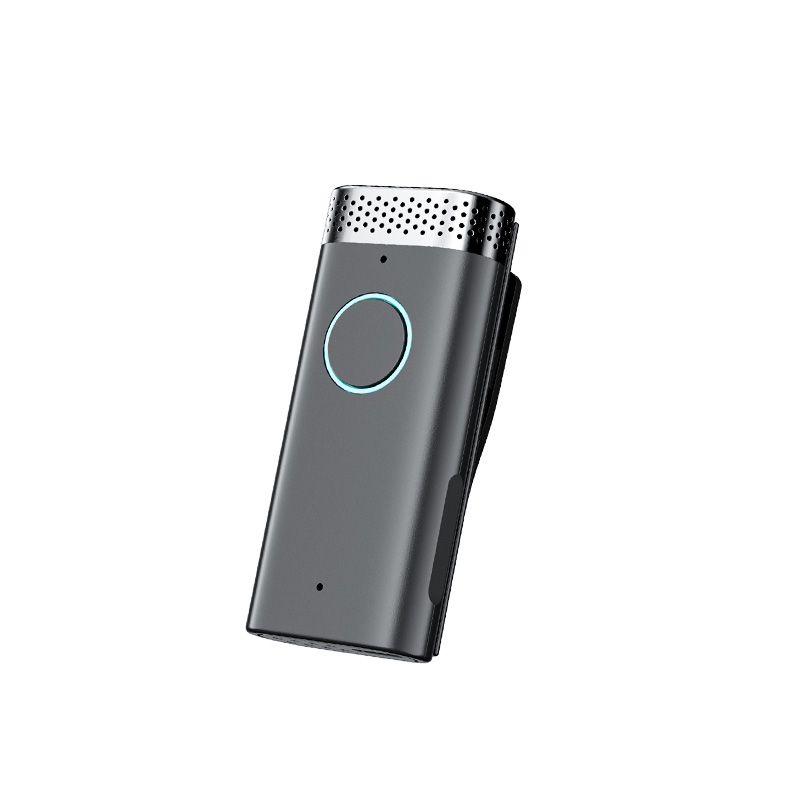
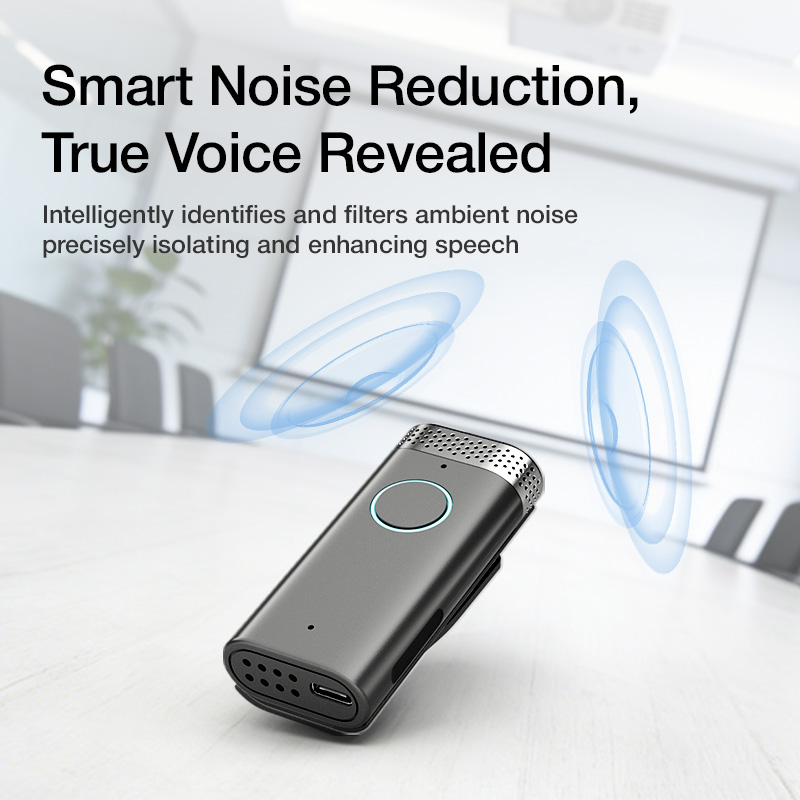
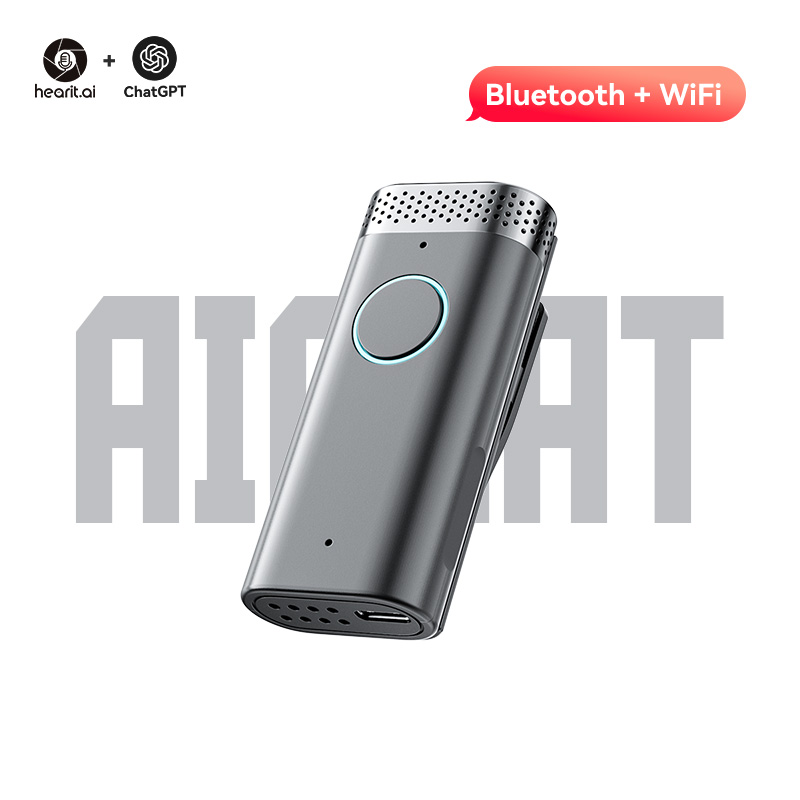
For this reason, device-level consistency matters. According to the official documentation, MIC06 is model HA-MIC06, branded by Hearit.AI as ClinicMic, and positioned as a professional AI voice device for clinic and enterprise scenarios. Its audio system combines a hybrid microphone array, including condenser and omnidirectional components, with AI noise reduction. It supports Bluetooth 5.3 plus dual-band Wi-Fi, and includes medical-grade material, NFC support, and gyroscope-based sensing. These verified facts align directly with the need for stable, repeatable capture in real healthcare environments.
Trend: AI Productivity Is Rising, but So Are Production Pitfalls
A useful market signal comes from the current headline theme, “When AI writes the code: Productivity gains and production pitfalls.” Although that discussion focuses on software development, the lesson applies to healthcare documentation workflows. AI can accelerate output, but speed alone does not guarantee production reliability. Systems that generate content quickly still fail if upstream inputs are noisy, if review checkpoints are weak, or if ownership of follow-up actions is unclear.
Healthcare teams are now facing a similar maturity moment. Early AI adoption often prioritized transcription speed. The next stage prioritizes operational confidence: can teams trust the capture process, validate key details quickly, and move decisions into execution without creating downstream ambiguity? This is where MIC06 becomes strategically relevant. ClinicMic supports the trend toward practical, production-grade AI workflows by addressing the capture foundation rather than only the final text output.
The trend also changes procurement behavior. Leaders are no longer asking only whether a tool has AI features. They ask whether the tool can support repeatable weekly operations under realistic conditions: mixed speaker distance, background noise, variable connectivity, and cross-team participation. In that context, MIC06 is not just a recording endpoint. It is an infrastructure component for documentation governance, because stable capture quality reduces avoidable correction cycles later in the pipeline.
Workflow: A MIC06-First Documentation System for Healthcare Teams
Step one is pre-meeting standardization. Assign a clear capture owner for each recurring meeting and keep setup routines consistent. Use one checklist for all teams: device readiness, placement, connectivity choice, and note template assignment. With MIC06, teams can choose Bluetooth 5.3 or dual-band Wi-Fi based on meeting environment and integration needs. Consistency at this stage prevents ad hoc setup errors that often consume time after the meeting ends.
Step two is controlled capture during the session. Position MIC06 so the hybrid microphone array can collect both close and room voices with minimal obstruction. Avoid frequent repositioning unless required by room dynamics. In active clinic or enterprise settings, AI noise reduction and the condenser-plus-omnidirectional design help preserve clarity when environmental sound changes. The practical rule is simple: preserve source quality first, because everything downstream depends on it.
Step three is structured post-meeting conversion. Do not over-edit transcripts line by line. Instead, verify high-impact fields first: names, decisions, owners, deadlines, and unresolved questions. Then publish a concise record with fixed sections, such as key decisions, assigned actions, and pending clarifications. This format helps remote and on-site teams read quickly while retaining enough context for accountable execution.
Step four is follow-up enforcement and closure tracking. Every action item should include one owner and one due date before publication. Items missing either field must be resolved in the same cycle. At the next weekly meeting, start by reviewing the previous action list before opening new topics. This closes the loop and turns documentation from passive archives into active operational control. MIC06 delivers the most value when paired with this discipline, because reliable capture plus consistent governance creates compounding efficiency.
Use Cases and CTA: Deploy MIC06 as Core, Add MIC05 for Coverage Flexibility
A common use case is a clinic group running multiple weekly coordination meetings across locations. In this model, MIC06 serves as the primary device for core documentation streams where consistency is critical. ClinicMic’s professional positioning for clinic and enterprise scenarios fits this requirement. Teams gain a stable capture baseline, then apply one review template and one follow-up process across departments, reducing format drift and handoff confusion.
Another use case is mixed operating environments where some teams need offline continuity or lighter deployment in addition to the primary workflow. Here, MIC05 can act as a secondary complement. Officially, HA-MIC05 is Hearit.AI VoiceRec Pro, listed as an AI Noise Reduction Voice Recorder, positioned for AI voice interaction plus local offline recording support. MIC05 supports Bluetooth 5.3 and 2.4GHz Wi-Fi, and uses a multi-microphone noise reduction design in the official guide. This makes VoiceRec Pro a practical backup or extension layer while MIC06 remains the central standard.
The practical call to action is to launch a focused pilot, not a broad redesign. Select one recurring documentation-heavy meeting stream, deploy MIC06 as the primary capture device, and run the same summary and follow-up template for two to four weeks. Measure process indicators your team already tracks, such as note completion timeliness, action-item clarity, and follow-up closure consistency. Then decide where MIC05 should extend coverage for offline or mobile continuity. For healthcare organizations navigating AI productivity pressure, a MIC06-first approach offers a controlled path to faster documentation with stronger operational reliability.